Read all about Bumblebees Active in Winter
How to make a house for Mason Bees

Biodiversity Begins at Home...

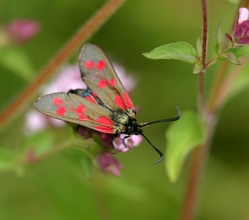
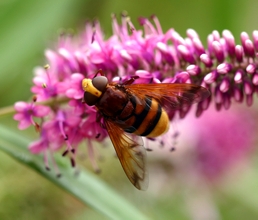
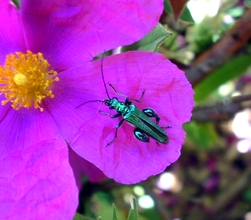
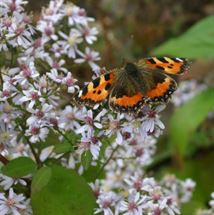
Red Admiral and Buddleja weyeriana Galingale Wool Carder Bee - Anthidium Wasp BeetleWild Primrose Fruits of Spindle Tree


A garden is your canvas and you are the painter..
but even the most subtle planting can seem two-dimensional and lifeless if there are no birds, pollinating insects, and other wild creatures to give movement and life.


'Garden Wildlife' doesn’t mean ‘Rampant Weeds and Wilderness’..
Most of the birds and insects and other animals that visit gardens are species that favour flowery hedgerows, flowery meadows or sunny woodland glades. We can replicate these features when we plant our garden borders.


Let’s repay our debt to pollinators..
Flowers don’t exist just to ornament our gardens. Flowers have close and special relationships with their pollinators. By creating gardens we provide food and homes for those pollinators.


We can be ‘Citizen Scientists’ .. There is still much to learn about garden birds, insects and mammals. Gardeners are helping to extend our knowledge of the natural world by taking part in various garden wildlife observation and recording schemes.


Wildlife-friendly Gardens don’t have to be boring Gardens..
all styles of garden can be planted and looked after in a way which will provide a home for local wildlife. Formal or informal, small or large, in city or country.


Use these pages to find the information you need to create habitat that will sustain your local wildlife.
This is an independent website, and its contents are based on my own experience, over many years, as a gardener and naturalist.

I've done lots of spadework, to provide you with lots of information about wildlife friendly gardening. My basics page tells you what it is all about. I've written a series of fact sheets which cover several subjects including what to plant to attract wild bees and moths, and herbs for the wildlife garden. I also give lists of recommended reading and an extensive annotated bibliography, and suggest a few wildlife-friendly gardens to visit . If you are reading this in the USA or Canada, there is a special North America page for you as well as a special North American books section in the bibliography.

I believe that gardens should be places of beauty, and they are a place where we can grow food. They are also the places where many people have their main interaction with wildlife, in the form of garden birds and insects. Future gardens will fulfil all these roles. I believe that all styles of garden can be managed in a wildlife-friendly way, including formal gardens and vegetable gardens.

- Marc Carlton

News for 2010: Our New Garden

For many years my partner and I lived in Penge, in South London. Our garden developed and evolved over that period, as indeed did my own interest in the ecology of gardens. I eventually became very interested in the relationship between plants and pollinators. In recent years I studied ecology at Birkbeck College in London, and chose to investigate aspects of the ecology of winter bumblebees for a dissertation project.

In March 2009 we moved to Chepstow or Cas-gwent, in South East Wales. We are going to plan and develop our new garden particularly with wild bees in mind - mainly through our choice of plants. With the concern about the decline of bees now featuring heavily in the media, this is very topical. A few year ago, when I first wrote the information sheets about wild bees (which you can download from this website), I felt a bit like a lone voice - but suddenly and belatedly the world of horticulture is waking up to the importance of bees of all kinds as pollinators.

We are also planning to incorporate more fruit trees and bushes throughout the garden than we had in our last garden, using them in semi-wild hedges or to form a shrub and tree layer. Although this idea is often presented as something new and radical, through the notions of 'the edible garden' and 'permaculture gardening', our forbears grew lots of food in their cottage gardens in this way. Perhaps we are just perceiving this feature of garden design and planning from a more ecological standpoint these days.

It is still early days for us in Chepstow, but in due course we will be writing about our new garden on this website. In the meantime I will be keeping this site up to date, especially the bibliography and the links , because there is nothing more depressing than an abandoned website.

You can still read about our former garden in London, and the basic principles of garden ecology which it exemplifies, on the page entitled About Our London Garden and there are some interesting photographs of a continental 'nature garden' in the Europe section.


Woodruff, Galium odoratum

Top

© Marc Carlton 2010. You are welcome to print this page for personal use or for educational purposes.

Contact